

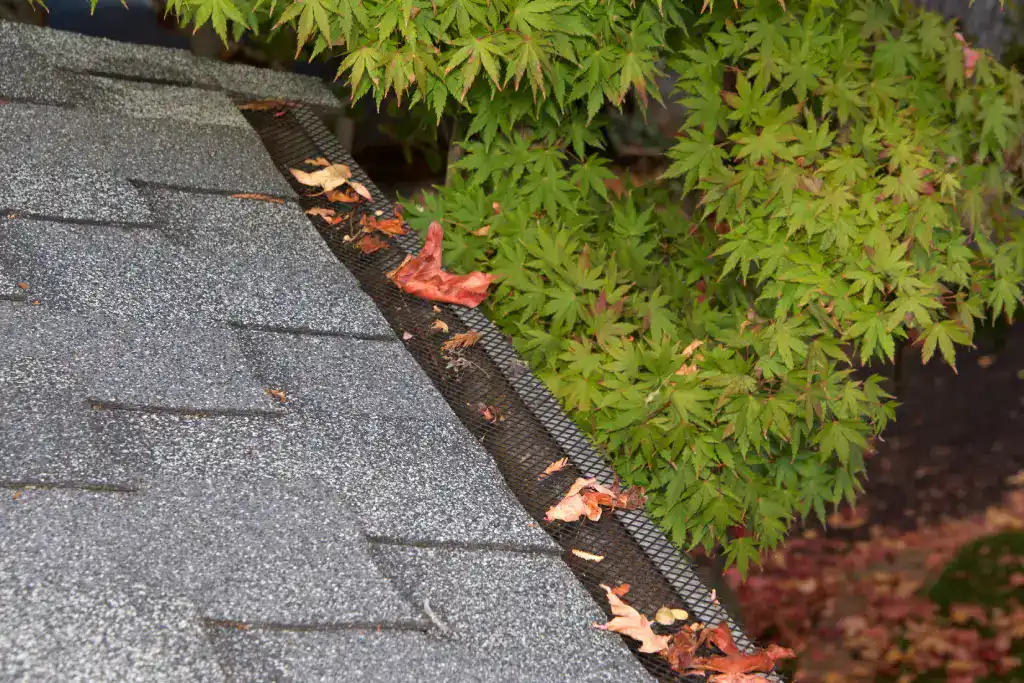
If you have ever climbed a ladder to clear soaked leaves out of a clogged gutter in October, you already know why gutter guards keep coming up in conversations with Eastern Iowa homeowners. The bigger question is usually cost. Gutter guard pricing varies widely depending on the product, your home, and who installs it, so it helps to understand the ranges before you start requesting quotes.
This guide breaks down typical gutter guard costs, the factors that push prices up or down, and what homeowners in Iowa City, Cedar Rapids, the Quad Cities, and Dubuque should expect to budget. Because pricing depends on so many variables, treat the numbers below as a starting point for your own conversation with an installer rather than a fixed quote.
How Much Do Gutter Guards Cost?
Nationally, gutter guard installation tends to fall somewhere between roughly $6,400 and $9,500 for a 200-linear-foot home when installed by a professional, according to This Old House, which works out to around $40 per linear foot on average across guard types. That said, the type of guard you choose can move that number substantially in either direction, and local labor rates in Eastern Iowa may differ from the national figures cited above.
Here is a general breakdown by guard type. These are approximate, non-binding ranges meant to help you compare options, not a quote.
| Gutter Guard Type | Typical Cost Per Linear Foot (Installed) | Typical Cost for an Average Home (150 to 200 ft) | Best For |
|---|---|---|---|
| Foam inserts | Roughly $20 to $25 | Roughly $3,000 to $5,000 | Budget-conscious homeowners with light debris |
| Screen guards | Roughly $35 to $40 | Roughly $5,250 to $8,000 | Homes with larger leaves, like maple or oak |
| Micro-mesh guards | Roughly $40 to $50 | Roughly $6,000 to $10,000 | Homes with fine debris such as pine needles or shingle grit |
| Reverse-curve/surface tension | Roughly $40 to $47 | Roughly $6,000 to $9,400 | Heavy debris areas needing durable, long-term protection |
Because gutter guard pricing is genuinely variable, and because manufacturers and installers price differently, we recommend getting a written, on-site estimate rather than relying on averages to budget a real project.
What Moves the Price Up or Down
A handful of factors typically explain why two homes with similar square footage end up with different gutter guard quotes.
Roofline length and complexity. More linear feet of gutter naturally means more material and labor. Homes with multiple roof valleys, dormers, or steep pitches often take longer to work on safely, which can add to labor costs.
Debris type. Properties surrounded by mature oaks and maples, common throughout established Eastern Iowa neighborhoods, may need a more robust screen or micro-mesh product than a home with mostly grass and shrubs nearby. Finer mesh generally costs more per foot but is designed to handle smaller debris like pine needles and roof grit.
Gutter condition and size. If your existing gutters need repair, resealing, or replacement before guards go on, that adds to the project. Homes with oversized 6-inch gutters, which handle nearly double the water volume of standard 5-inch gutters, may also see different guard pricing than standard-gutter homes.
Roof accessibility. Second- and third-story sections, steep pitches, or homes near power lines can require additional safety equipment and time, which tends to raise labor costs.
Material and warranty coverage. Heavier-gauge aluminum, stainless steel mesh, and stronger warranty backing generally cost more upfront than lighter-duty foam or vinyl options, though they may reduce maintenance calls over time.
Ice and snow load. Eastern Iowa winters bring meaningful snow and ice accumulation, and a guard built to handle that load without deforming may cost more than a warm-climate product, but it is often worth the investment for durability.
Eastern Iowa Weather and Why Gutter Protection Matters Here
Iowa City, Cedar Rapids, and Dubuque each average close to 39 inches of combined annual precipitation, while the Quad Cities area averages around 36 inches with slightly more days of measurable precipitation, according to climate data compiled by Current Results. Spread across spring downpours, summer storms, and winter snow and ice, that adds up to a lot of water moving through your gutter system every year.
Combine that with the region’s mature tree canopy, and gutters in these communities are often doing double duty: managing heavy seasonal rainfall while filtering out leaves, seed pods, and pine debris. When gutters clog, water can back up under roof edges or pour down siding and foundations instead of routing away from the house, which is part of why gutter protection is a common request across Iowa City, Coralville, North Liberty, Cedar Rapids, Marion, Bettendorf, and the surrounding Quad Cities and Dubuque areas.
Our Gutter Guard Options
We install two primary gutter guard systems for Eastern Iowa homes: Elite Screen, a heavy-duty aluminum guard with a low-profile, black powder-coated finish designed to filter leaves and maple seeds while blending with the roofline, and Hydro Flo, a stainless steel mesh guard built for finer debris like pine needles and shingle grit. Installation does not require nails or fasteners into the roof, and we clean the existing gutter system before guards go on. Hydro Flo also comes with a lifetime warranty against clogging on covered downspouts, though as with any warranty, terms and coverage details are worth confirming directly with us before you commit.
Because the right guard depends on your specific trees, roofline, and gutter setup, we typically walk homeowners through both options during a free, no-obligation estimate rather than recommending one product site-unseen.
How We Estimate Your Gutter Guard Project
- We assess your roofline and gutters. A technician measures your linear footage and checks the condition of your existing gutters.
- We identify your debris challenges. Nearby tree types, roof pitch, and past clogging issues all factor into which guard makes sense.
- We walk you through product options. You will see the difference between Elite Screen and Hydro Flo and how each handles your specific situation.
- We provide a written estimate. Because pricing depends on the variables above, we do not quote gutter guard projects over the phone without seeing the home.
Frequently Asked Questions
Do gutter guards eliminate gutter cleaning entirely? Not always. Guards significantly reduce how often gutters need cleaning, but occasional maintenance is still a good idea, especially after major storms.
Are more expensive gutter guards always better? Not necessarily. The right choice depends on your debris type and roofline. A homeowner near pine trees may need finer mesh than a homeowner dealing mostly with larger leaves, regardless of price point.
Can gutter guards be added to existing gutters? In most cases, yes, as long as the existing gutters are in good structural condition. If your gutters are damaged or undersized, repair or replacement may need to happen first.
How long does installation typically take? Gutter guard installation for a standard residential home is often completed in a single day, though timelines can vary based on roofline complexity and weather.
Get a Free, No-Pressure Estimate
Gutter guard pricing depends on enough variables that the only way to get an accurate number for your home is to have someone look at it. If you are in Iowa City, Cedar Rapids, the Quad Cities, Dubuque, or a surrounding Eastern Iowa community, we would be glad to walk your roofline, talk through your options, and put together a written estimate with no obligation. Call us at 319-337-2225 or request your free quote through our gutter guards page to get started. You can also read what other Eastern Iowa homeowners have said about working with us on our testimonials page, or check our FAQ for more answers before you call.
About the author
Cole Flatland is the Cedar Rapids Gutters Manager at Tomlinson Cannon, where he oversees gutter installation and gutter guard projects across Eastern Iowa. He works with homeowners daily to match the right gutter protection to their roofline and local debris conditions.