

Basement waterproofing in Eastern Iowa typically runs $3,000 to $10,000 or more, and the honest answer to “what will mine cost” is that it depends entirely on what’s actually happening under your floor. A single cracked wall and a basement fighting hydrostatic pressure from a high water table are two different jobs with two very different price tags, even though both get called “waterproofing.”
Here’s what actually drives that range, what a fair quote should include, and how homeowners across Iowa City, Cedar Rapids, the Quad Cities, and Dubuque should think about the decision.
Average Basement Waterproofing Cost in Eastern Iowa
| Repair Type | Typical Cost Range | What It Involves |
|---|---|---|
| Crack injection (localized) | $500 – $1,500 per crack | Polyurethane foam or epoxy sealing a single wall crack |
| Sump pump replacement or upgrade | $1,500 – $3,500 | New pump, pit, and discharge line, sometimes with battery backup |
| Partial interior drain tile | $3,000 – $6,000 | Drain tile along one or two walls, tied into an existing or new sump pump |
| Full perimeter interior drain tile system | $6,000 – $10,000+ | Drain tile around the entire basement perimeter, new sump pump, discharge line |
| Full system with dual sump pumps and battery backup | $8,000 – $12,000+ | Complete perimeter drain tile, two pumps for redundancy, battery backup, drywall removal and replacement if needed |
These figures reflect typical residential basements in Eastern Iowa. Larger basements, finished walls that need to come down first, or unusual foundation layouts can push a project above this range, which is why we recommend a free, in-person inspection over a phone estimate.
What This Looks Like in a Real Basement
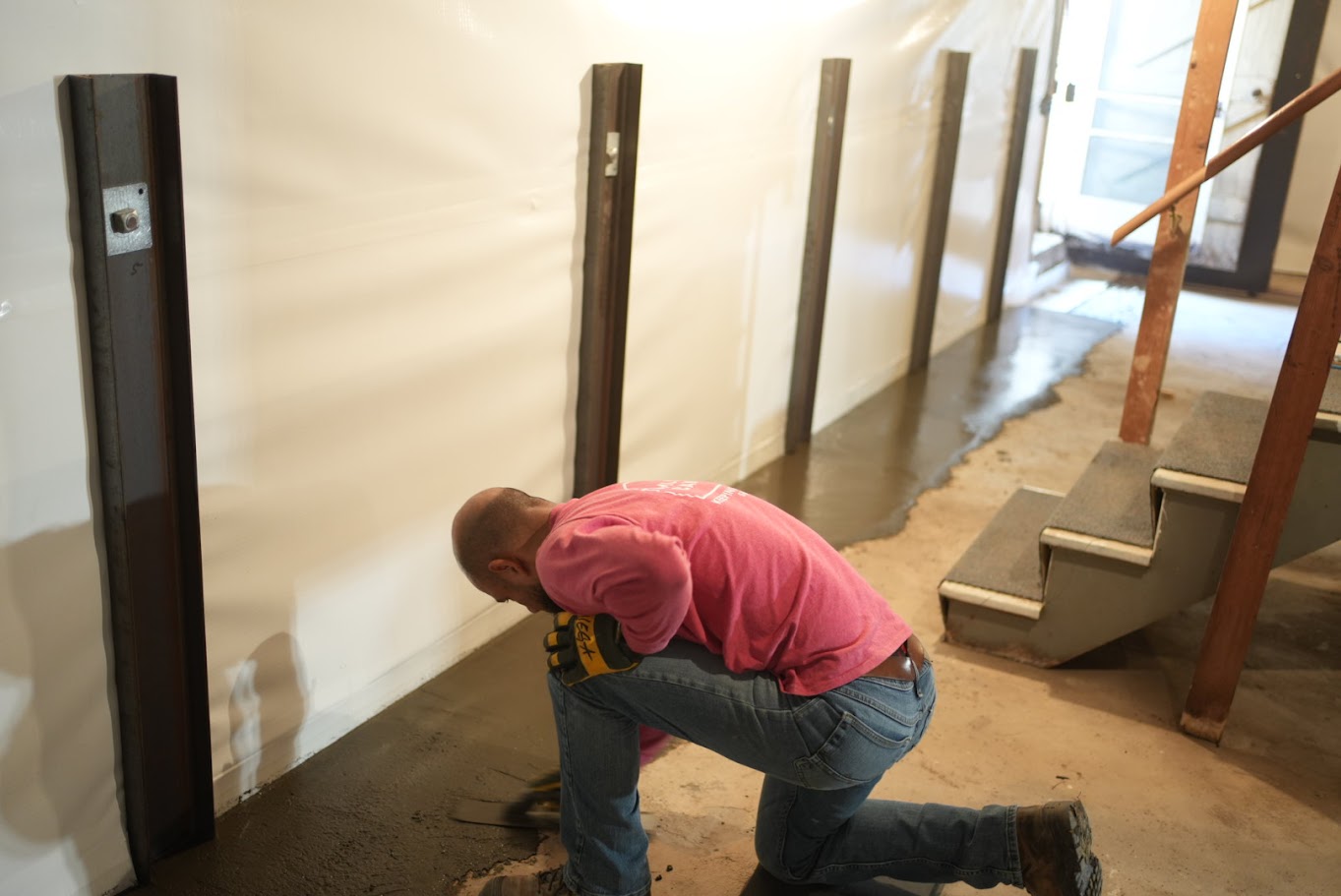
The cost ranges above are easier to picture with a real example. One Eastern Iowa homeowner reached out after dealing with water finding its way into their basement despite earlier attempts to fix it. After getting a clear estimate, they decided to move forward. Our team installed a partial interior drain tile system tied into a new sump pump, in the $3,000 – $6,000 range. Since then, the homeowner has reported a heavy rainstorm with no water intrusion. You can read this review, along with other customer experiences, on our testimonials page.
What Moves the Price Up or Down
Length of Your Basement Perimeter
Drain tile is priced by the linear foot, so a small basement with 80 feet of perimeter wall costs less to waterproof than a sprawling ranch with 150 feet. If only one wall is taking on water, a partial system along that wall costs significantly less than going around the entire foundation.
Foundation Wall Type
Poured concrete and cinder block foundations don’t fail the same way, and they don’t cost the same to fix. Cinder block walls have hollow cores and mortar joints, which means water can travel further before it shows up, sometimes requiring more extensive drain tile or block-specific injection methods. Poured concrete walls tend to crack in more predictable places, which can make targeted repairs less expensive.
Whether You Need Interior Drain Tile
If your basement only has a single crack letting in water after heavy rain, crack injection alone may solve the problem for a few hundred dollars. If water is coming in from multiple points, along the cove joint where the wall meets the floor, or you’re dealing with hydrostatic pressure pushing up from beneath the slab, you need a drain tile system, which is a bigger job involving trenching along the interior perimeter.
Sump Pump Configuration
A single sump pump handles most homes. Homes with a history of flooding, a high water table, or that rely on the basement for anything valuable usually need a dual pump setup, where a second pump kicks in if the primary is overwhelmed, plus a battery backup that keeps pumping during a power outage. Each of those additions raises the cost but also reduces the odds of a repeat flood.
Drywall and Finish Removal
If your basement is finished, waterproofing contractors typically need to remove drywall, insulation, or flooring along the affected walls to access the foundation. That demolition, plus putting it back afterward, adds to the total cost and is worth asking about upfront so it doesn’t come as a surprise mid-project.
Eastern Iowa Market Context
Cost isn’t just about the size of the job. It’s also about what the ground around your home is doing.
Iowa City homes, especially older ones near downtown, often sit on soil that swells and contracts with moisture, putting steady pressure on foundation walls year-round. Our Iowa City basement waterproofing customers most often need drain tile paired with a sump pump rather than crack injection alone. Cedar Rapids deals with a similar mix of clay-heavy soil and freeze-thaw cycles, and its older housing stock means many basements were built before modern drainage planning was standard, which is why basement waterproofing Cedar Rapids jobs often lean toward a full perimeter system.
The Quad Cities, particularly neighborhoods near the Mississippi and Rock River in Davenport, Bettendorf, Moline, and Rock Island, face a higher water table and more frequent flood-prone conditions, which often pushes homeowners there toward full perimeter systems rather than a partial fix. Our basement waterproofing Davenport customers most often need is kind of a complete system rather than a spot repair. Dubuque’s clay-rich soil and seasonal freeze-thaw cycles create similar hydrostatic pressure, and its older foundations are prone to the same kind of gradual water intrusion.
In all four areas, the pattern is the same: older homes built before modern waterproofing standards tend to need more complete systems, while newer homes with isolated leaks often just need targeted crack repair.
How to Choose a Contractor
Basement waterproofing is subsurface work that affects your home’s structure for decades, so the contractor matters as much as the system. Look for an established structural specialist with a track record in foundation and water management, not a general handyman or a contractor who normally handles unrelated home repairs. Waterproofing done incorrectly, or with the wrong system for your soil and foundation type, tends to fail again within a few years.
A long-term, transferable warranty is one of the clearest signals you’re working with a company that stands behind its work. If a contractor won’t commit to a warranty that covers the system if your basement takes on water again, that’s worth asking about directly before you sign anything.
Questions to Ask Before You Hire
- Is the warranty transferable if I sell the house, and does it cover labor or only materials?
- Will you need to remove drywall or flooring, and is that included in the quote?
- What’s included in the sump pump system: battery backup, alarm, warranty on the pump itself?
- How many linear feet of drain tile does my basement need, and how did you calculate that?
- Will the crew match the drain tile depth to my footing, or use a standard depth regardless of my foundation?
- What happens to the water after it leaves my sump pump: where does the discharge line go?
- Do you carry liability insurance and workers’ compensation, and can I see proof of both?
- How many basements like mine, same foundation type and same neighborhood, have you waterproofed?
A contractor who answers these clearly, without hedging, is one worth hiring. If the answers are vague, or the estimate skips straight to a price without an inspection, that’s a sign to keep looking.
Frequently Asked Questions
Does this system address hydrostatic pressure beneath the floor slab, or just wall seepage?
This is one of the most important questions to ask any waterproofing contractor, because the two problems require different systems. Wall seepage, water coming through cracks or porous concrete, can often be handled with crack injection alone. Hydrostatic pressure beneath the slab is water pushing up from underneath the floor itself, and it requires a drain tile system that captures water at the footing before it ever reaches the surface. A contractor who can’t answer this clearly, or who proposes the same fix regardless of which one you have, is worth a second opinion.
What is the warranty coverage if the basement takes on water again?
Ours is a lifetime guarantee that’s transferable if you sell the home, meaning if water returns after installation, we stand behind the system at no additional cost. Not every contractor offers this. Some warranties only cover materials, not labor, or expire after a set number of years rather than lasting for as long as you own the home. Get the warranty terms in writing before you sign anything, and ask specifically what triggers a covered repair versus what would be billed separately.
Is basement waterproofing covered by homeowners insurance?
Usually not. Most homeowners insurance policies exclude gradual water seepage and groundwater intrusion, which is what waterproofing addresses. Coverage is more likely for sudden, accidental water damage, like a burst pipe. That’s part of why a transferable lifetime warranty matters: it’s the protection insurance typically won’t provide.
How long does a basement waterproofing project take?
It depends on the scope. Crack injection is often finished in a few hours. A partial drain tile system along one or two walls usually takes a day or two. A full perimeter system with a new sump pump, and especially one that requires drywall removal, can take several days. Your inspection will give you a specific timeline based on your basement’s size and condition.
Will waterproofing lower the humidity and musty smell in my basement, or just stop standing water?
Both, in most cases. Standing water and hydrostatic pressure pushing moisture through walls and floors are usually the source of musty odors and elevated humidity, not just visible puddles. A properly installed drain tile and sump pump system addresses the moisture at its source, which typically clears up the smell along with the water.
My basement has never flooded, just a damp, musty smell. Do I still need a full system?
Not necessarily. A musty smell without standing water can point to a smaller issue, like a hairline crack, condensation, or poor exterior grading, that a limited fix or drainage correction can resolve. But it can also be early-stage hydrostatic pressure that hasn’t shown up as visible water yet. A free inspection is the only reliable way to tell which one you’re dealing with before it becomes a bigger job.
Does the cost change for hillside homes or homes with a history of spring flooding?
Yes. Homes on a hillside, where water naturally flows toward the foundation, or in areas prone to spring thaw flooding often need a bigger system from the start, sometimes including dual sump pumps and additional drainage capacity. These conditions are common in parts of Dubuque and along the river neighborhoods in the Quad Cities, and they typically push a project toward the higher end of the cost range.
Can waterproofing be done without digging up my yard?
Interior systems, which are what we install most often, don’t require exterior excavation. Drain tile goes in along the interior perimeter of the basement floor, and crack injection is done entirely from inside. This keeps the cost down and avoids disrupting landscaping, unlike exterior waterproofing methods that dig down along the outside of the foundation.
Get an Accurate Estimate for Your Home
Every basement is different, and the only way to know what yours will actually cost is to have someone look at it. At Tomlinson Cannon, we’ve been solving water problems across Eastern Iowa since 1948, and our basement waterproofing systems are backed by a lifetime transferable guarantee. We’ll walk your basement, explain what’s causing the water intrusion, and give you a straight answer on what it will take to fix it.
Read more about our approach on our basement waterproofing page, see what past customers have to say on our testimonials page, or call us at (319) 337-2225 to schedule your free inspection and get pricing specific to your home.
By Justin Anderson, Sales Representative at Tomlinson Cannon
Justin has spent 10 years walking Eastern Iowa homeowners through basement waterproofing estimates, from the first inspection to the final walkthrough. Because he’s priced out hundreds of projects across the region, he has a clear sense of what actually drives cost up or down.